.png)


Updated for September 2026.
You catch your reflection in a store window or a bad bathroom light, and something looks off. You slept fine. You are not stressed. Yet your face reads tired anyway. If that sounds familiar, the culprit is often not your skin at all. It is volume, specifically the volume your cheeks used to have and quietly lost.
Cheek filler has become one of the most requested treatments for exactly this reason, but most people considering it have the same question before they book anything: what actually changes? Not the marketing version, the real one. This guide walks through how cheek volume loss shows up on your face, what a well-done treatment realistically changes, and how results tend to build and settle over time.
Why Do Cheeks Lose Volume and Shape With Age?
Cheek flattening is not really about "aging skin" in the way most people assume. It is a structural shift happening underneath the skin.
What Happens to the Fat Pads in Your Face?
Your midface has distinct fat compartments that sit like little cushions over your cheekbones. In your 20s and early 30s, they stay plump and positioned high on the face, which is why younger cheeks look rounded and lifted. Over time, those fat pads shrink and shift downward. The support they once gave the skin above them fades, and the cheek area starts to look flatter and more hollow, especially toward the upper cheek and under the eye.
Does Bone Loss Play a Role Too?
Yes, and this part surprises a lot of people. The cheekbones themselves undergo subtle bone resorption with age, meaning the underlying scaffolding of the face literally gets smaller. Less bone projection means less structure to hold everything else up. Combine that with fat pad descent and reduced skin elasticity, and you get the layered volume loss that defines an aging midface.
Is Sagging Skin the Cause or the Result?
Usually the result. Skin sagging in the lower face and jawline is frequently a side effect of lost cheek support rather than a separate problem entirely. When the cheek loses its "shelf," skin and soft tissue below it have nothing to rest on, which is part of why cheek volume loss and jawline softening tend to show up around the same time. If you want a deeper look at how skin laxity develops, our article on sagging skin causes and treatments covers that connection in more detail.
How Can You Tell If You Have Cheek Volume Loss?
Before jumping to any treatment, it helps to recognize what midface flattening actually looks like day to day.
Why Do You Look Tired Even When You're Not?
This is the most common complaint we hear. A flattened cheek removes the natural light-catching curve that used to sit high on the face. Without that highlight, the whole midface reads flat and shadowed, which the brain interprets as fatigue, even when you got a full eight hours.
What Happened to the "Apple" of Your Cheek?
Smile in a photo from ten years ago and compare it to one from this year. If the rounded, apple-like fullness that used to appear when you smiled is noticeably less defined now, that is a classic sign of fat pad volume loss rather than anything related to weight or skin quality.
Are Under-Eye Shadows Really a Cheek Problem?
Often, yes. People frequently blame under-eye hollowing entirely on the eye area, book eye-specific treatments, and feel disappointed with the results. In many cases, the actual issue starts one level down. When the upper cheek loses volume, the tissue below the lower eyelid loses its support too, creating a shadow that looks like an eye problem but originates in the midface.
Do Nasolabial Folds Get Worse With Cheek Flattening?
They tend to, yes. As the cheek loses its lifted, forward projection, tissue has less to rest against and gradually settles toward the nose and mouth area, deepening those folds over time. This is one reason cheek volume and nasolabial fold depth are so closely linked.
What Actually Changes After Cheek Filler Treatment?
This is the part most people really want answered, and it deserves an honest, expectation-setting answer rather than an exaggerated one. Once cheek filler is placed correctly, the changes tend to follow a predictable pattern rather than a dramatic overnight transformation.
Does Filler Lift the Cheek, or Just Add Fullness?
Both, when it is done well. Placing filler along the cheekbone and upper midface restores the structural support that fat pads and bone used to provide. That added structure creates a subtle lift effect on the tissue below it, which is different from simply "filling in" a hollow spot. The goal at Marée Aesthetics & Longevity is always restoration of natural contour, not an exaggerated, overfilled look.
Will Nasolabial Folds and Under-Eye Hollows Improve Too?
Often as a secondary effect, yes. Because those concerns are frequently caused by cheek volume loss in the first place, restoring the cheek can soften nasolabial folds and reduce the appearance of under-eye shadowing without those areas being treated directly. This is one of the more satisfying parts of cheek treatment: addressing one area creates ripple effects elsewhere on the face.
What Does a Subtle Result Look Like Versus a More Defined One?
Results exist on a spectrum, and that is intentional. A conservative approach restores natural roundness and a refreshed, "well-rested" appearance without anyone being able to pinpoint that you had anything done. A more defined approach can add sculpted contour and higher cheekbone projection for people who want a more noticeable change. Neither is right or wrong. It comes down to your facial anatomy and personal goals, which is exactly what gets discussed during a consultation.
How Soon Will You See Results, and How Long Do They Last?
With hyaluronic acid based dermal fillers, results are visible almost immediately, with any minor swelling settling within a week or two to reveal the final shape. Results generally last nine to eighteen months depending on the product and your individual metabolism. Biostimulatory options build more gradually and work differently, which brings us to the next question.
How Does a Provider Choose the Right Filler for Cheeks?
Not every cheek concern calls for the same product, and this decision matters more than people realize.
When Is Traditional Hyaluronic Acid Filler the Right Choice?
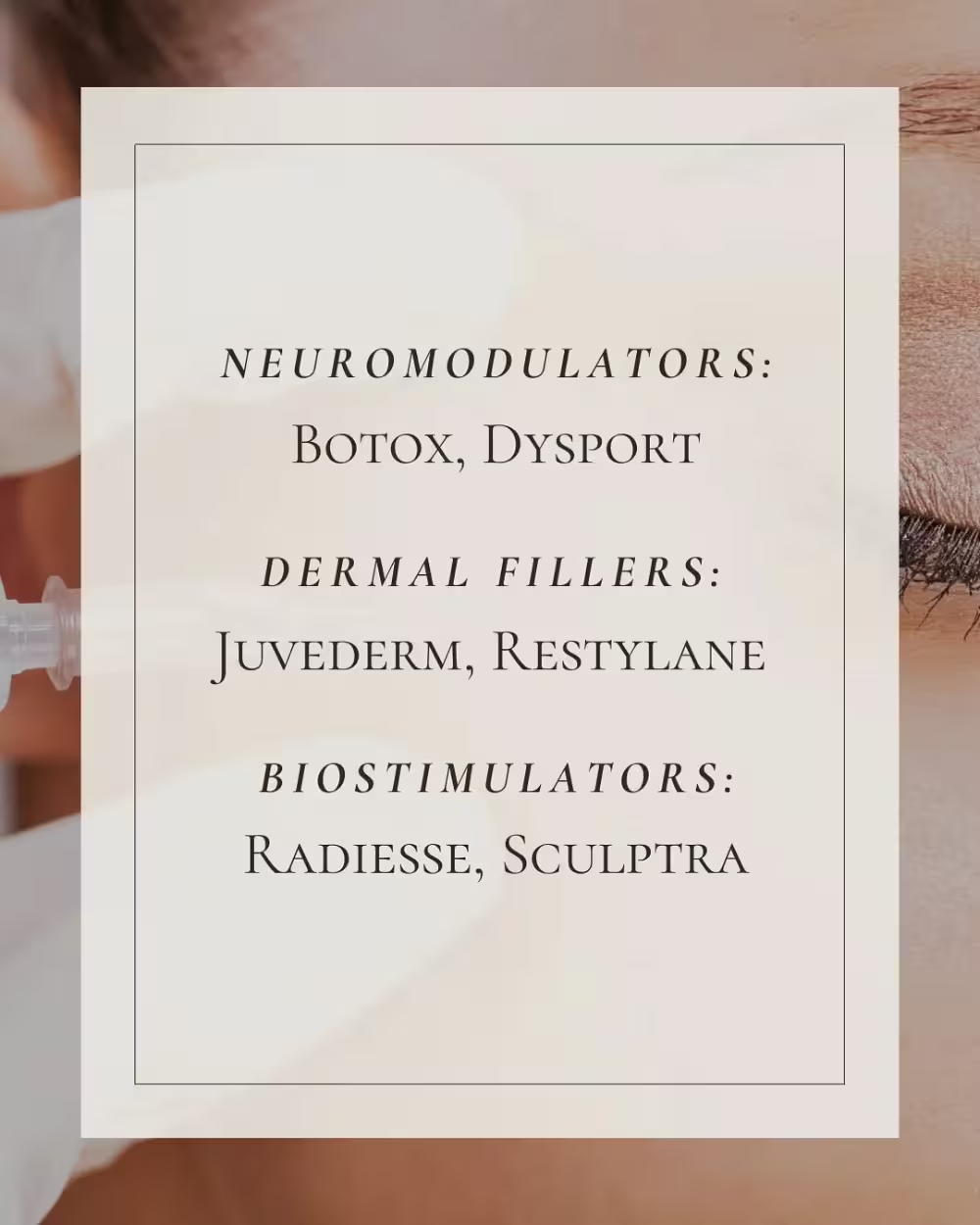
Dermal fillers made from hyaluronic acid are often the go-to for moderate volume loss where a precise, immediately visible, and adjustable result is the priority. They are also reversible, which appeals to people who want a lower-commitment way to test cheek volume before considering longer-lasting options.
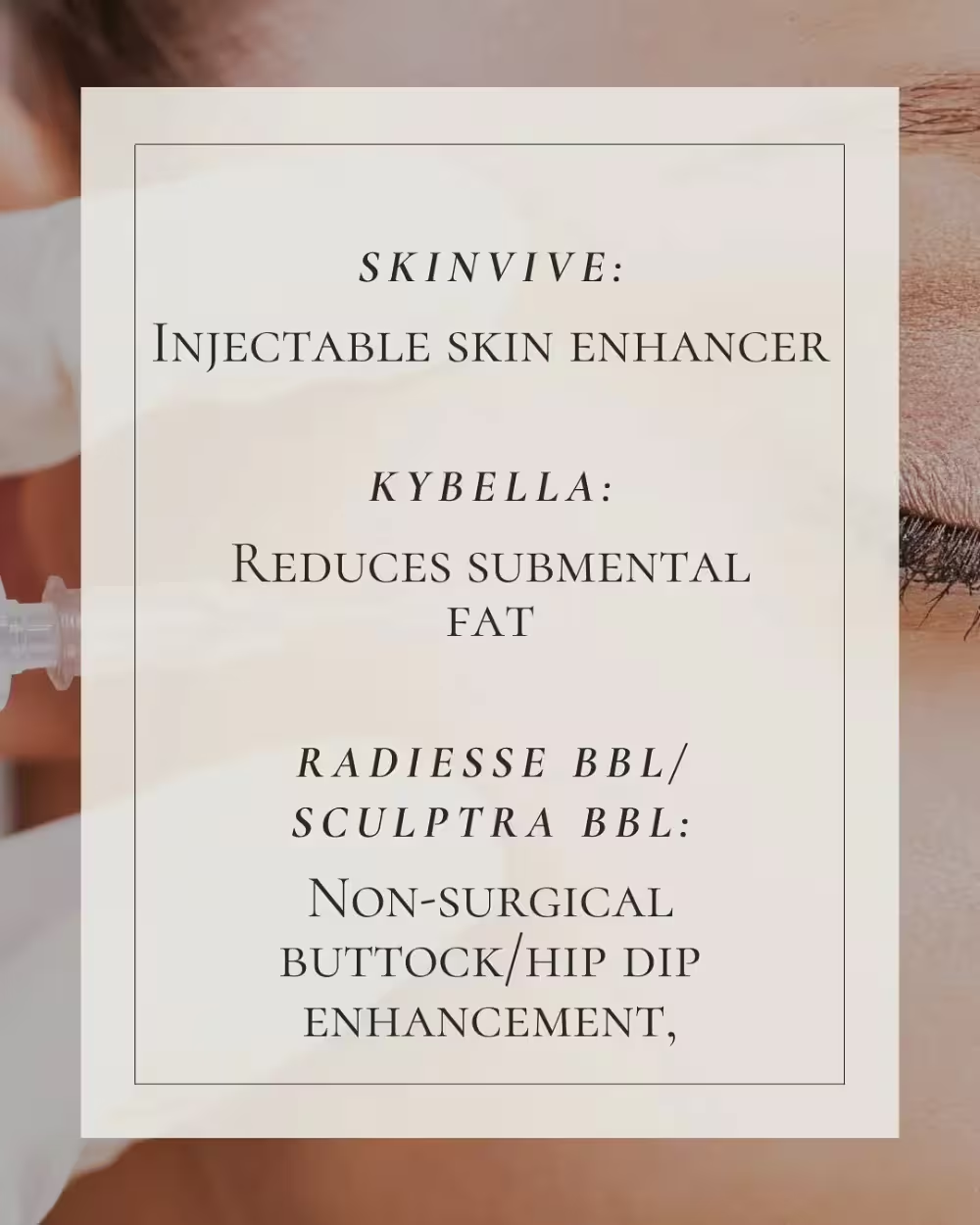
What Makes Radiesse a Different Option for Cheek Volume?
Radiesse BBL is calcium hydroxylapatite based and tends to suit people looking for a bit more structural lift and a thicker consistency, often well suited to the cheekbone area specifically. You can read more about how this option works in our Radiesse in Basking Ridge guide.
Why Would Someone Choose Sculptra Instead?
Sculptra BBL works differently than traditional filler. Rather than adding volume directly, it stimulates your own collagen production over a series of sessions, so results build gradually over a few months rather than appearing all at once. This tends to suit people with more significant volume loss who want a longer runway of natural-looking improvement, and it is often paired with other approaches for comprehensive facial rejuvenation. Our article on what Sculptra BBL is and how it works breaks this down further.
How Is the Right Product Actually Decided?
There is no single "best" filler for cheeks in general. The decision depends on how much volume has been lost, your skin's thickness and elasticity, how quickly you want to see results, and your overall goals. This is exactly why a proper consultation matters more than picking a product off a menu.
Who Tends to Get the Best Results From Cheek Filler?
Good candidates for cheek filler are generally people who have noticed gradual midface flattening, a "tired" look that persists regardless of rest, or subtle nasolabial fold and under-eye changes that trace back to volume rather than skin texture. People in their 30s often use it preventatively to maintain contour, while people in their 40s, 50s, and beyond often use it to restore volume that has already visibly changed. There is no single "right age," only the right amount of change for your face and goals, which our team can walk through at a consultation.
Frequently Asked Questions
Does cheek filler look natural, or will people notice I had something done? When placed conservatively and matched to your facial structure, cheek filler is designed to look like restored volume, not an obvious change. Most clients report that people simply comment they look well rested rather than noticing a specific treatment.
How long does a cheek filler appointment take? Treatment itself typically takes under an hour, and most people return to normal activities the same day with only minor, short-lived swelling.
Can cheek filler help with under-eye hollows without treating that area directly? Often, yes. Because under-eye shadowing is frequently caused by cheek volume loss rather than the eye area itself, restoring cheek volume can visibly soften that hollow look as a secondary benefit.
What is the difference between dermal filler, Radiesse, and Sculptra for cheeks? Dermal filler offers immediate, adjustable results, Radiesse adds thicker structural volume well suited to the cheekbone, and Sculptra builds results gradually by stimulating your own collagen over time. The right choice depends on your goals and how your face has changed.
How do I know if I actually need cheek filler or something else? The clearest answer comes from an in-person evaluation, since flattening, sagging, and hollowing can overlap or have different underlying causes. A consultation is the best next step to get a straight answer.
The Verdict on Your Reflection: You're Not Imagining It
If your cheeks have been quietly losing their lift, you were not imagining that "off" feeling every time you caught your reflection. It has a name, a cause, and a realistic solution. Marée Aesthetics & Longevity in Basking Ridge, New Jersey works with clients throughout Somerset County to restore natural cheek contour using an approach matched to your face, not a one-size-fits-all injection plan. If you are ready to see what a personalized plan could look like for you, schedule a consultation and let's talk through your options.