.png)


Updated for September 2026.
If you have been thinking about dermal filler but keep pausing before you book, chances are the question holding you back isn't "will this work," it's "how long will this actually last." It's one of the most common questions we hear at Marée Aesthetics & Longevity, and it's a fair one. Filler is an investment of time and money, and knowing what to expect helps you plan smarter, whether that means budgeting for touch-ups or choosing a longer-lasting option from the start.
The truth is, there is no single answer. How long dermal filler lasts depends heavily on where it's placed, what type of product is used, and how your body processes it. A syringe in your lips will behave very differently than the same syringe placed along your jawline or cheekbones. Below, we break down realistic timelines area by area, then explain how different filler types and biostimulators change the equation entirely.
If you're new to fillers altogether, our beginner's guide to dermal fillers is a great place to start before diving into the specifics below.
Why Does Dermal Filler Longevity Vary So Much by Area?
Before getting into specifics, it helps to understand the factors at play. Dermal filler longevity isn't random. It comes down to a handful of predictable variables.
How Much Does Muscle Movement Affect Filler Breakdown?
Areas with constant movement, like the lips (used for talking, eating, and smiling all day), tend to metabolize filler faster than areas with less muscle activity. The mechanical stress essentially speeds up how quickly your body breaks the product down.
Does Metabolism Play a Role in How Long Filler Lasts?
Yes. Individual metabolic rate affects how quickly the body absorbs hyaluronic acid based fillers. Patients with faster metabolisms, often correlated with higher activity levels or younger age, may notice results fading a bit sooner than average.
Why Do Some Areas Hold Filler Longer Than Others?
Areas with more surrounding tissue and less friction, like the cheeks or under-eye hollows, tend to hold filler volume longer simply because there's more structural support and less constant compression.
How Long Does Lip Filler Last?
Lip filler is one of the most requested treatments, and also one of the shorter-lasting placements. On average, patients can expect results to last six to nine months, though this varies based on lip anatomy, product density, and how expressive your day-to-day movement is (frequent talking, drinking through straws, or lip habits like biting can all play a role).
Because lips see so much repetitive motion, many patients choose to schedule a small refresher around the six-month mark rather than waiting for filler to fully dissolve. This keeps results looking natural and consistent rather than experiencing a noticeable "before and after" swing.
How Long Does Cheek and Midface Filler Last?
Cheek and midface filler tends to last considerably longer, often twelve to eighteen months, sometimes longer depending on the product used. The midface has less muscle movement compared to the lips, and filler placed here is often used to restore structural volume rather than just add softness, which means it settles into the tissue more predictably.
This is also an area where many patients begin exploring Radiesse, a calcium hydroxylapatite based filler known for strong lift and longer-lasting volume in the midface, which we'll cover in more detail below.
How Long Does Jawline and Chin Filler Last?
Jawline and chin filler results typically last twelve to fourteen months. This area benefits from a firmer, denser product that can hold structure against the pull of gravity and daily jaw movement from talking and chewing.
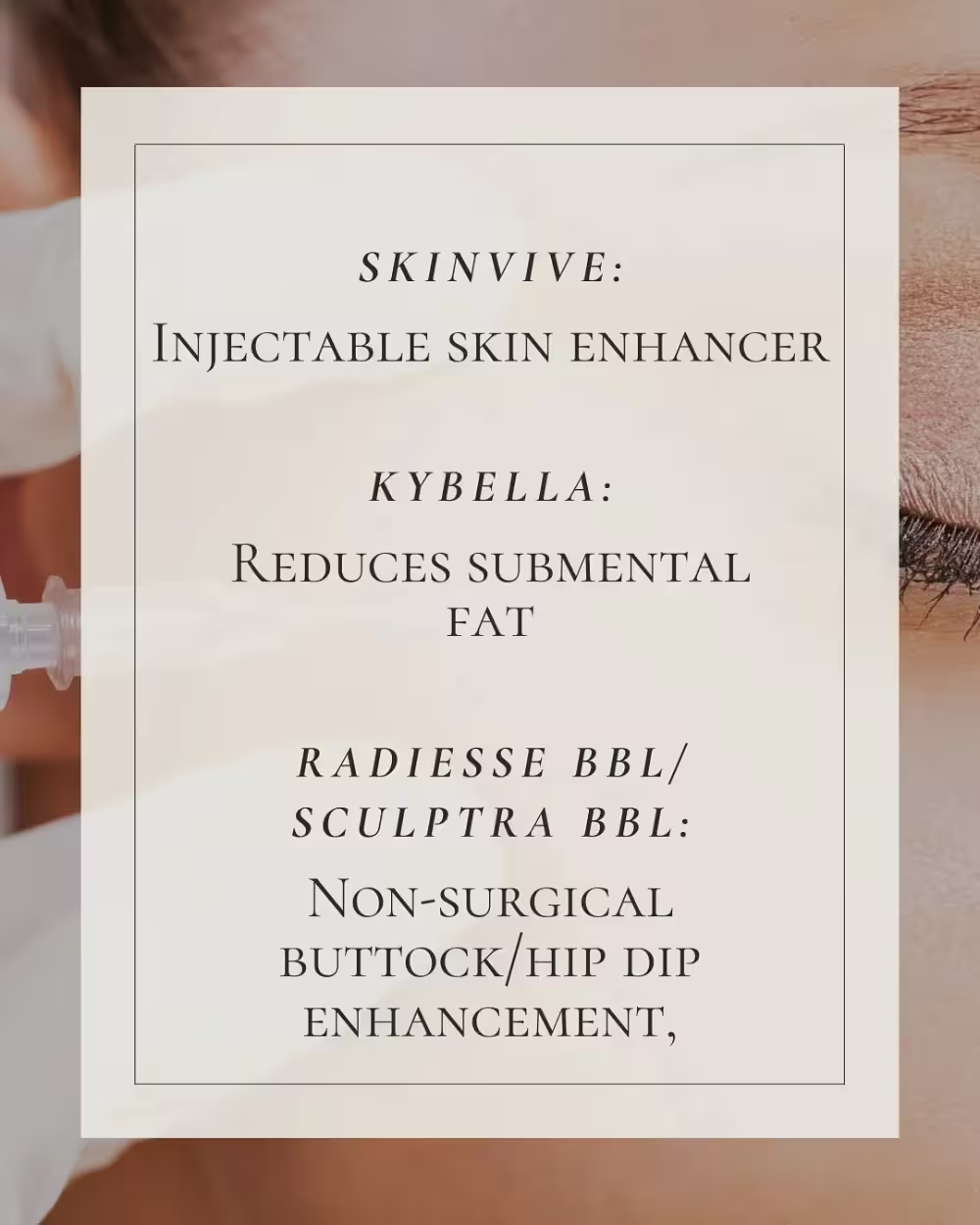
It's worth noting that jawline filler addresses volume and contour, while submental fullness (a double chin) is a different concern entirely, related to fat rather than lost structure. If fat under the chin is the primary issue rather than jawline definition, Kybella may be the more appropriate treatment, since it's designed to reduce fat cells rather than add volume. A consultation can help clarify which concern you're actually addressing.
How Long Does Under-Eye Filler Last?
Under-eye, or tear trough, filler tends to last nine to twelve months on average. This delicate area requires a softer, more flexible product because the skin here is thin and mobile with frequent blinking and facial expression. Because precision matters so much in this zone, results and longevity depend heavily on an experienced injector's technique and product selection.
How Long Does Hand Filler Last?
For patients concerned about volume loss in the hands, which can make veins and tendons appear more prominent, filler results generally last nine to twelve months. Hands see a lot of use and exposure, so while results are noticeable, this is an area that often benefits from a maintenance schedule similar to the lips.
Does the Type of Filler Change How Long It Lasts?
Absolutely, and this is often the bigger factor compared to placement alone. Not all dermal filler is created equal, and understanding the differences between product categories helps set realistic expectations.
How Long Does Traditional Hyaluronic Acid Filler Last?
Hyaluronic acid (HA) fillers, like those used in classic lip and cheek treatments, work by attracting and binding water to add immediate volume. They're prized for their natural look and the fact that results are instantly visible. On average, HA fillers last anywhere from six to eighteen months depending on area, as outlined above. One advantage worth mentioning: HA fillers can be dissolved if needed, giving patients flexibility and peace of mind.
Skinvive by Juvéderm is a newer entry in this category, designed specifically for skin hydration and quality rather than structural volume, with results generally lasting around six months.
How Is Radiesse Different From Traditional Filler?
Radiesse is made from calcium hydroxylapatite, a mineral-based compound that not only adds immediate volume but also stimulates the skin's own collagen production over time. This dual action is why Radiesse often lasts twelve to fifteen months, longer than many traditional HA options, making it a popular choice for cheek and jawline contouring where longevity matters most.
What Makes Sculptra a Different Approach Entirely?
Sculptra works differently than either of the above. Rather than delivering instant volume, Sculptra uses poly-L-lactic acid to gradually stimulate the body's own collagen production over a series of sessions. Results build slowly over a few months, but once achieved, they can last up to two years or longer, making it one of the longest-lasting options available for patients focused on gradual, natural-looking rejuvenation. You can read more about how this process works in our Sculptra guide.
How Do You Know Which Filler Is Right for You?
With so many variables (treatment area, product type, individual metabolism, and personal goals), the honest answer is that the right plan is different for everyone. Someone hoping for subtle lip enhancement with flexibility to adjust has very different needs than someone seeking long-term jawline contouring or gradual, collagen-driven rejuvenation.
This is exactly why a proper consultation matters. At Marée Aesthetics & Longevity, every filler plan starts with a conversation about your goals, your facial anatomy, your lifestyle, and how much maintenance you're realistically willing to commit to. From there, our team can recommend whether traditional dermal fillers, Radiesse, Sculptra, or a combination approach makes the most sense for you. You can browse our full range of options in our dermal filler category.
Frequently Asked Questions
Does dermal filler last longer the more times you get it? Many patients find that with consistent treatment over time, results can last slightly longer as the tissue adapts and, in the case of biostimulators like Sculptra, collagen production builds cumulatively. However, this varies by product and individual response.
Is it bad if dermal filler wears off unevenly? Not necessarily. Since different areas and products break down at different rates, some unevenness is normal, especially if multiple areas were treated on different timelines. A follow-up appointment can address any spots that need a small refresh.
Can you speed up how fast dermal filler dissolves? Hyaluronic acid filler can be dissolved intentionally using an enzyme if a patient wants to reverse results early, but it does not naturally break down faster on its own beyond normal metabolic processes.
How soon can you get more filler once it wears off? Most patients can be reassessed and retreated once results have visibly faded, though your provider will evaluate your individual timeline at a follow-up visit rather than working off a fixed calendar date.
Does age affect how long dermal filler lasts? Age can play a role, since skin structure and metabolism shift over time, but lifestyle, product choice, and treatment area typically have a bigger overall impact on longevity than age alone.
Ready to Find Your Perfect Filler Match?
Guessing how long your results will last shouldn't be part of the process, and with the right plan, it doesn't have to be. Whether you're drawn to the immediacy of traditional filler, the added collagen boost of Radiesse, or the slow-build confidence of Sculptra, the Marée team can map out a timeline that actually fits your life. Schedule a consultation today and let's build a plan designed around how long you actually want your results to last.