Updated October 2026
Not all wrinkles are created equal. The line that appears between your brows when you concentrate on a spreadsheet is a completely different problem from the fold that deepens beside your mouth over the years, and both are different again from the fine crinkling that shows up on sun-exposed skin. That is why the most effective wrinkle treatment is rarely a single product or device. It is a match between the type of line you have and the treatment designed to address its cause.
At Marée Aesthetics & Longevity in Basking Ridge, New Jersey, wrinkle care starts with understanding what is actually creating each line. This guide walks through the main types of wrinkles, which treatments fit each one, and how patients across Somerset County and Morris County can build a plan that looks natural rather than overdone.
What Causes Wrinkles in the First Place?
Wrinkles form when skin loses some of its structure and flexibility while the forces acting on it continue. Age gradually thins collagen and fat in the deeper layers of skin, UV exposure breaks down collagen and elastin, and repeated expressions like squinting, smiling, and frowning etch grooves that can become more visible over time. Smoking, pollution, and genetics also play a role, according to the Mayo Clinic.
Because these causes overlap, most faces have more than one kind of line. Sorting them into categories makes it much easier to choose the right anti-aging treatment.
What Are the Different Types of Wrinkles?
Most facial lines fall into three broad groups: expression lines caused by muscle movement, folds caused by volume loss, and fine lines caused by changes in skin quality. Each group responds to a different kind of treatment.
Expression Lines (Dynamic Wrinkles)
These are the lines you see when your face moves. Forehead lines when you raise your brows, the "11" lines between your eyebrows when you focus, and crow's feet when you smile are classic examples. Over time, lines that once appeared only with movement can begin to linger at rest.
Volume-Related Folds
As the face loses fullness, the skin above has less support. This can deepen nasolabial folds (the smile lines from the nose to the corners of the mouth) and marionette lines (the creases running from the corners of the mouth toward the chin).
Fine Lines and Texture Changes
These are the shallow, crinkled lines often caused by sun damage, dehydration, and gradual collagen decline. They tend to appear on the cheeks, around the eyes, on the neck, and across the chest.
Which Wrinkle Treatment Works for Expression Lines?
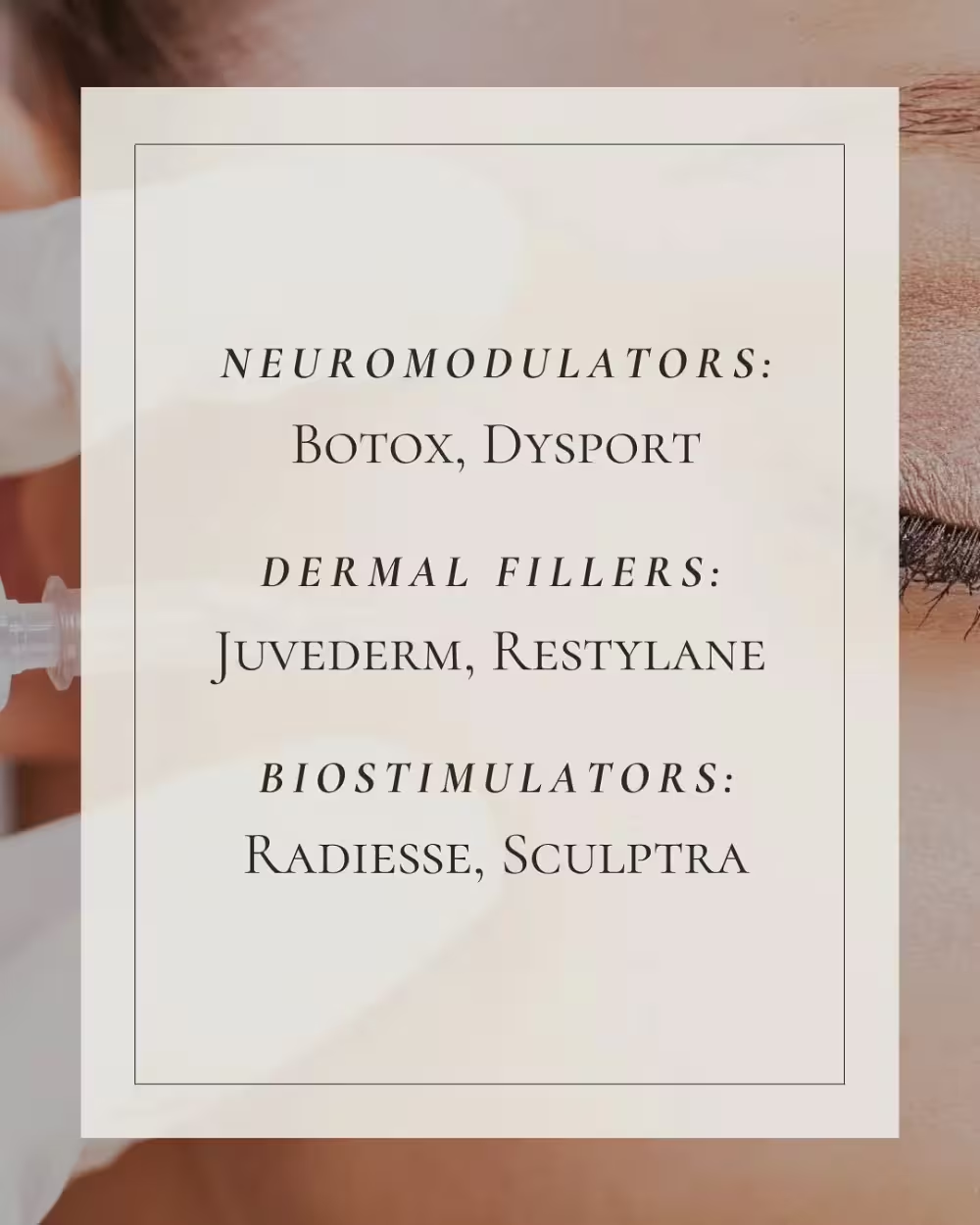
Neuromodulators, often called wrinkle relaxers, are the primary treatment for expression lines. They temporarily relax the specific muscles that create a line, which softens its appearance while allowing natural facial movement when dosed thoughtfully.
At Marée, neuromodulators are used for forehead lines, frown lines, crow's feet, bunny lines on the nose, chin dimpling, and vertical neck bands. Visible softening usually begins within a few days, with full results in one to two weeks. Results commonly last three to four months, so maintenance appointments help keep lines from returning to their previous depth.
FDA approval for these products varies by brand and by treatment area, so your provider will explain which uses are approved and which may be considered off-label. Common side effects can include temporary bruising, swelling, or headache, and less commonly a heavy brow or eyelid. The Mayo Clinic notes that neuromodulators are generally not recommended during pregnancy or breastfeeding.
Which Wrinkle Treatment Works for Folds and Volume Loss?
Folds caused by volume loss usually respond better to injectables that restore support beneath the skin than to treatments that relax muscles. At Marée, that means hyaluronic acid dermal fillers or collagen-stimulating biostimulators.
Dermal Fillers
Marée uses hyaluronic acid dermal fillers from the Juvéderm and Restylane families to soften nasolabial folds and marionette lines and to restore cheek volume. Many patients see an immediate difference, with results that commonly last 6 to 12 months depending on the product, the area, and individual metabolism. Mild swelling or redness typically settles within one to two days.
Sculptra and Radiesse
For patients whose lines are tied to broader collagen loss, Sculptra and Radiesse work differently. Both stimulate the body's own collagen production. Sculptra builds gradually over several months, while Radiesse can provide some immediate lift with continued improvement as collagen forms. At Marée, these biostimulators are used for smile lines, marionette lines, cheeks and midface, temples, the jawline, and the hands.
Which Wrinkle Treatment Works for Fine Lines and Crepey Skin?
Fine lines that come from sun exposure and skin-quality changes are best addressed by treatments that encourage collagen remodeling and smoother texture. Injectables alone rarely solve this layer of the problem.
- Fraxel FTX is a non-ablative fractional laser used on the face, neck, chest, hands, and eye area for fine lines, sun damage, uneven texture, and crepey skin. Most patients experience redness and swelling for a few days, and a series of one to three sessions is typical.
- Microneedling with the Collagen P.I.N. device creates controlled microchannels that prompt the skin's natural repair process. It is used for fine lines, rough texture, and mild laxity on the face, neck, and décolletage.
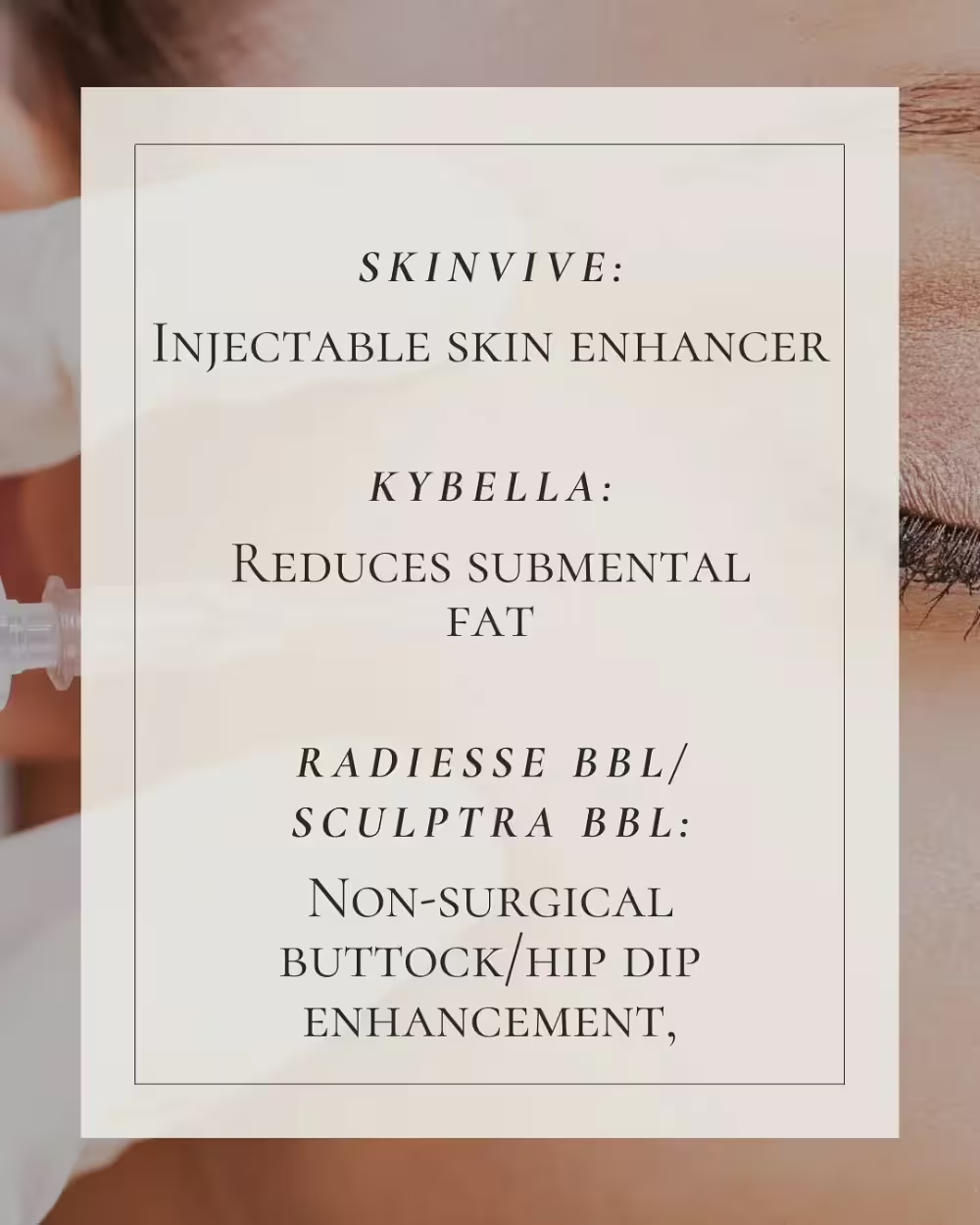
- SKINVIVE by JUVÉDERM is a hyaluronic acid microdroplet injectable designed to improve skin smoothness on the cheeks rather than add volume.
- Topical Peptides offer a provider-guided at-home option for fine lines, firmness, and hydration on the face, eye area, lips, neck, and chest.
How Does Wrinkle Treatment Differ for Men and Women?
The principles are the same, but the details matter. Men often have stronger facial muscles, which can affect how much neuromodulator is needed to soften forehead and frown lines. Many men also prefer a result that keeps some natural movement so they look rested, not altered.
Women in their 30s and 40s frequently notice volume-related changes in the midface first, often alongside fine lines from years of sun exposure. A combined plan that pairs a neuromodulator with a skin-quality treatment can address both without relying on large amounts of filler.
What About Busy Professionals With "Stress Lines"?
If you spend your day squinting at screens, furrowing through meetings, or commuting along I-287 with the sun in your eyes, expression lines tend to show up early and in predictable places: between the brows and around the eyes. For many working professionals in Basking Ridge, Bernardsville, and Morristown, neuromodulator appointments are appealing because a session typically takes 15 to 30 minutes and normal activities can usually resume the same day, with a few simple aftercare steps like staying upright for several hours and skipping intense exercise until the next day.
Pairing that with a skin-quality treatment scheduled around lighter weeks at work can address both the movement lines and the texture that stress and late nights tend to highlight.
Can You Combine Wrinkle Treatments?
Yes, and for many people a combination works better than any single treatment. Marée's service pages note that neuromodulators can be paired with dermal fillers and skin rejuvenation treatments, and that biostimulators can be combined with neuromodulators and skin rejuvenation as well. The order and timing are planned during your consultation so each treatment supports the next.
A common approach looks like this:
- Soften expression lines with neuromodulators.
- Restore support where folds have deepened using filler or a biostimulator.
- Improve the surface with Fraxel FTX, microneedling, or SKINVIVE.
- Maintain results with daily sunscreen and provider-guided skincare.
What Should You Expect at a Wrinkle Treatment Consultation?
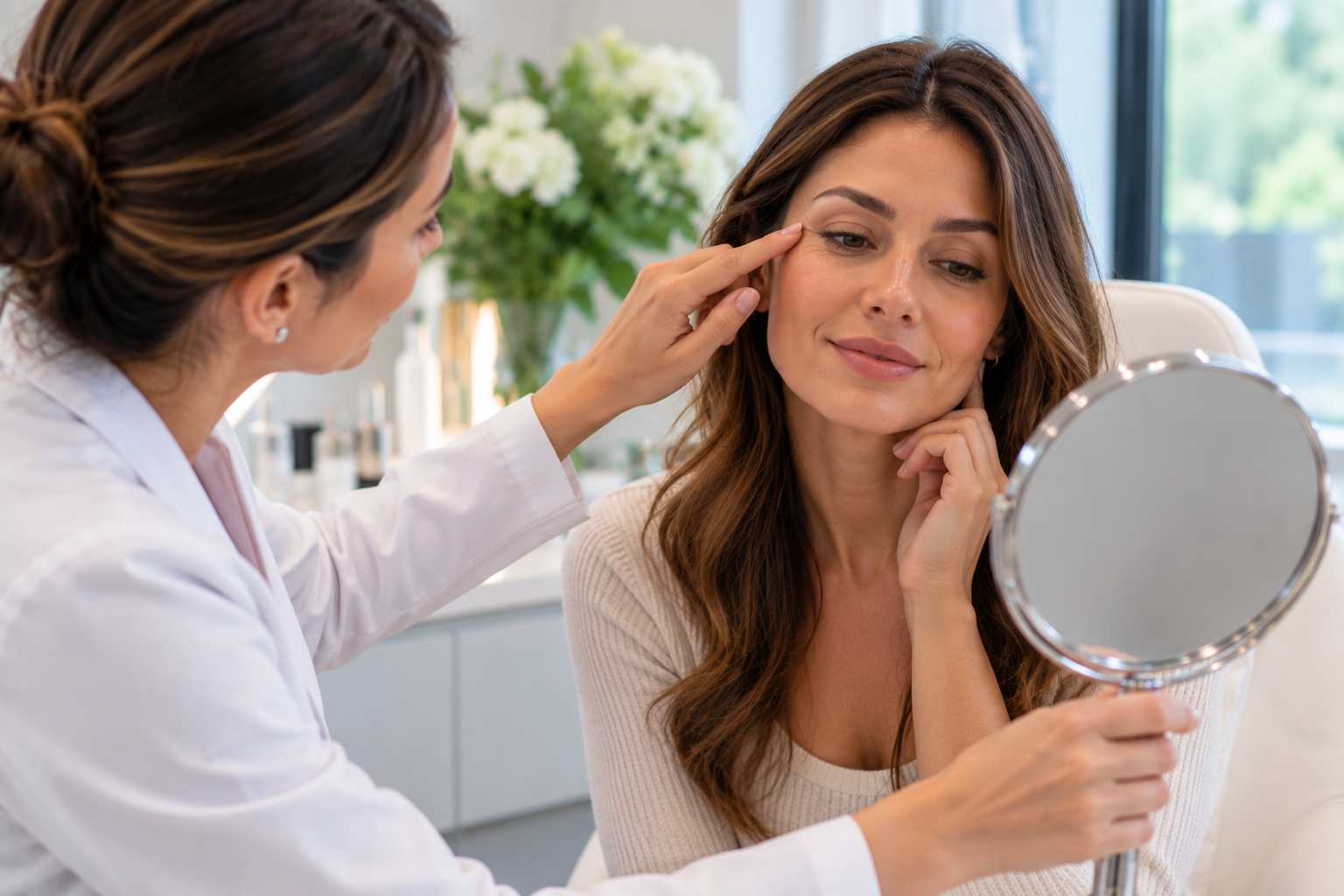
Marée offers a free consultation where your provider evaluates your lines at rest and in motion, discusses your skin history, and reviews any medications or supplements that could affect bruising or healing. Marée is a nurse practitioner-led practice under physician medical direction, and plans are built around natural-looking outcomes and realistic timelines rather than a one-size-fits-all package.
Bring a list of your goals, any past treatments you have had, and photos of yourself from a few years ago if you want to show what has changed.
Frequently Asked Questions
What is the best wrinkle treatment for forehead lines?
For forehead lines caused by raising the brows, a neuromodulator (wrinkle relaxer) is usually the first option. If the lines remain visible at rest, a skin-quality treatment like Fraxel FTX or microneedling may be added to improve texture.
How long does wrinkle treatment last?
It depends on the treatment. Neuromodulators commonly last three to four months, hyaluronic acid fillers often last 6 to 12 months, and Sculptra and Radiesse can provide longer-lasting improvement with maintenance. Laser and microneedling results develop gradually as collagen remodels.
Is there a wrinkle treatment with minimal downtime?
Neuromodulator appointments typically involve minimal downtime, and many patients return to work the same day. Fraxel FTX usually involves a few days of redness and swelling, and microneedling commonly causes redness or tightness for one to two days.
Can deep wrinkles be fully erased?
Deep, long-standing lines can usually be softened, but complete erasure is not a realistic expectation for most people. A layered plan typically gives the most natural improvement.
At what age should I start wrinkle treatment?
There is no single right age. Many people begin when they notice lines lingering at rest. Your provider can help you decide whether treatment makes sense now or whether skincare and sun protection are enough for the moment.
Smooth Operator: Your Next Step in Basking Ridge
The best wrinkle treatment is the one that fits the line in front of you. Expression lines, volume-related folds, and fine textural lines each have different causes, and a thoughtful plan addresses each one on its own terms. If you live or work in Basking Ridge or anywhere in Somerset and Morris Counties, Marée Aesthetics & Longevity at 665 Martinsville Rd #218 offers a free consultation to map out the right approach for your face, your schedule, and your goals.
Schedule your consultation or call (908) 373-0005 to get started.