.png)


You have done everything right. You have cut back on sugar, added more cardio to your week, maybe even started doing those "chin exercises" that promise a sharper jawline in ten minutes a day. And yet, when you catch your profile in a photo or glance down while looking in the mirror, that soft fullness under your chin is still there.
If this sounds familiar, you are not alone, and you are definitely not doing anything wrong. Submental fat, the clinical term for fat that collects under the chin, is one of the most stubborn and misunderstood areas of the body. It often has very little to do with your overall weight or how disciplined you are in the gym.
This month, as more people across Basking Ridge, New Jersey start planning ahead for fall photos, events, and the general desire to feel good in their own skin again, we wanted to break down exactly why the double chin is so resistant to typical fat loss methods, and what actually works when diet and exercise have hit their limit.
Why Diet and Exercise Don't Always Touch a Double Chin
It feels intuitive that losing weight anywhere on the body should eventually shrink fat everywhere, including under the chin. In reality, the body does not distribute or release fat evenly, and the submental area is often one of the last places to respond, if it responds at all.
Is It Genetics or Something I'm Doing Wrong?
For a large number of people, submental fullness is simply hereditary. If your parents or grandparents carried extra fullness under the chin, there is a strong chance you inherited the same fat cell distribution pattern, regardless of your current fitness level or eating habits. Genetics largely determines how many fat cells you have in a given area and how densely they are packed, and no amount of willpower changes that blueprint.
Can You Have a Double Chin at a Healthy Weight?
Yes, and this catches a lot of people off guard. It is entirely possible to be at a healthy, stable weight and still have noticeable fullness under the chin. This is because submental fat is not always a reflection of body fat percentage. Some people carry the majority of their genetic fat storage in this one area, which means the chin can look fuller even when the rest of the body appears lean.
Does Spot Reduction Actually Work?
This is one of the biggest myths in fitness, and it applies directly to the chin and neck area. Spot reduction, the idea that you can target fat loss in one specific area through targeted exercises, is not supported by how the body actually burns fat. Facial exercises may tone the muscles beneath the skin, but they do not shrink or eliminate the fat cells sitting above that muscle layer. That is why so many people in Basking Ridge tell us they have tried jaw exercises, chewing gum, or neck stretches for months with no visible change.
Fat Versus Skin Laxity: Why It Matters
Another piece of the puzzle is understanding the difference between excess fat and loose or aging skin. As we get older, the skin under the chin naturally loses some collagen and elasticity, which can create a similar appearance to submental fat even when fat volume has not increased. Age related skin laxity and true fat accumulation often show up together, which is part of why the area is so tricky to address on your own, and why an accurate in person assessment matters before choosing a treatment path.
Who Tends to Be Affected by Submental Fullness?
Submental fat does not discriminate by age, gender, or fitness level. We see it in people in their twenties who have simply always carried fullness in that area, as well as people in their fifties and sixties where aging and skin laxity have become bigger contributing factors. Hormonal shifts, family history, and even natural changes in facial structure over time can all play a role. If you have noticed that your chin profile has changed even though your weight has stayed relatively consistent, that is a strong sign the cause is structural rather than something diet related.
When Should You Consider a Professional Solution?
There comes a point where continuing to chase results through diet, cardio, or facial exercises stops making sense, especially if the fullness has been present for years or seems to be getting more noticeable with age. If you find yourself avoiding certain camera angles, feeling self conscious in profile photos, or simply ready to stop guessing, that is usually the right time to talk to a professional about targeted, non surgical options.
This is exactly where Kybella comes in.
What Is Kybella and How Does It Actually Work?
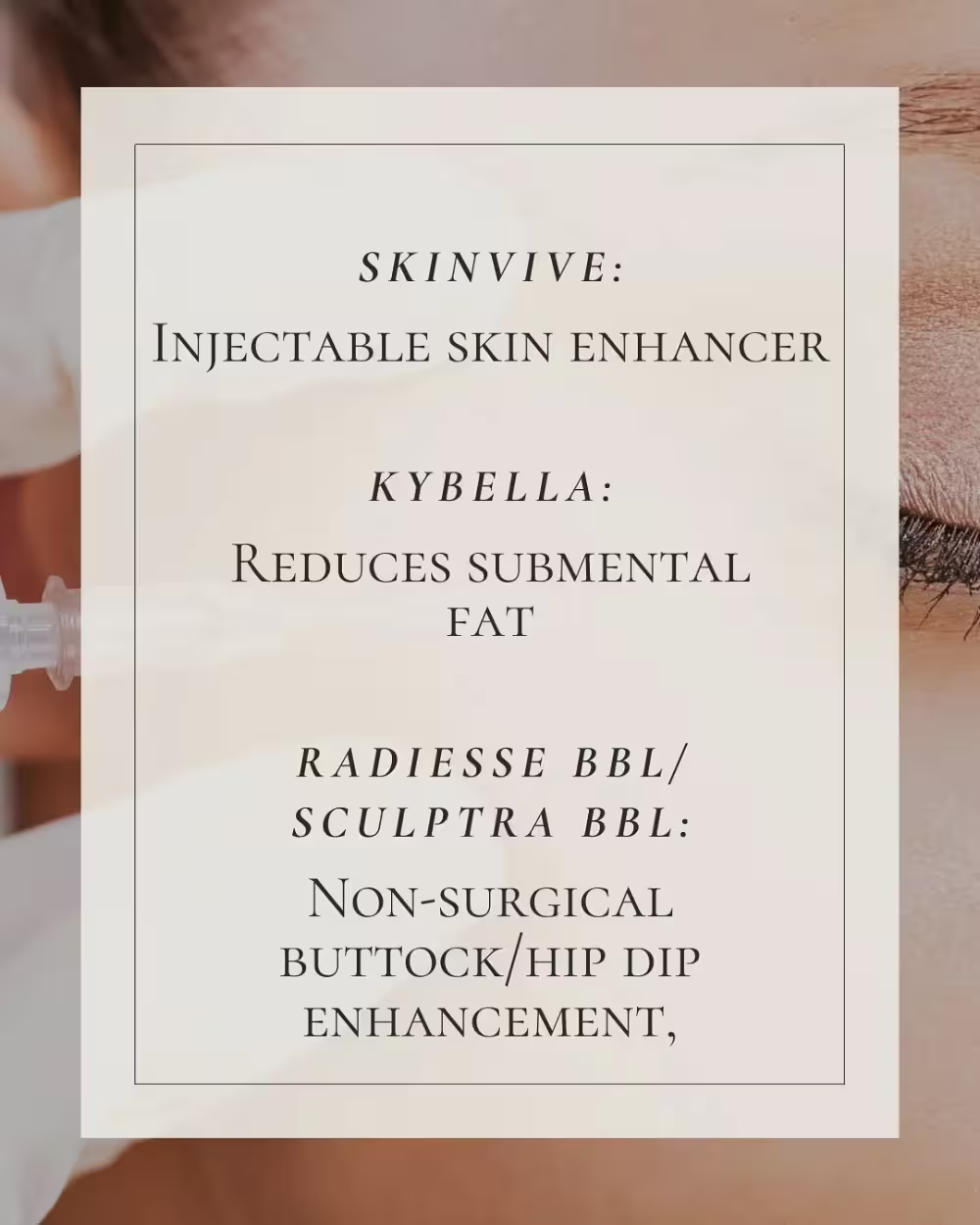
Kybella is an FDA approved injectable treatment made from a synthetic form of deoxycholic acid, a naturally occurring molecule in the body that helps break down and absorb dietary fat. When injected directly into the submental area, Kybella works by destroying the fat cells beneath the chin. Once those fat cells are broken down, the body naturally processes and eliminates them over the following weeks, and because the fat cells themselves are destroyed, they cannot store fat again in that same treated area.
This is a meaningful distinction from diet and exercise, which can shrink fat cells but never actually eliminates them. Kybella targets the cells directly, which is why it can succeed where months of lifestyle effort could not.
Are You a Good Candidate for Kybella?
Good candidates for Kybella are generally people who have moderate to noticeable fullness under the chin that has not responded to weight loss, and who are looking for a non surgical way to improve their profile without downtime. It tends to work especially well for people whose double chin is primarily fat driven rather than caused by significant skin laxity or loose tissue, which is why a proper consultation matters. During a visit at our Basking Ridge office, we take the time to evaluate your neck and chin area, talk through your goals, and confirm whether Kybella is the right fit or whether another approach from our full range of services might serve you better.
What Does a Kybella Session Actually Look Like?
A typical Kybella session is quick and straightforward. After the treatment area is cleaned and sometimes numbed for comfort, a series of small injections are placed beneath the chin in a carefully mapped pattern. Most sessions take well under an hour, and many patients return to their normal day shortly afterward. Some mild swelling, tightness, or bruising under the chin is common in the days following treatment, which is a normal part of the fat cells breaking down.
Most people need a series of sessions, typically spaced about a month apart, to reach their desired result. The exact number depends on how much fullness is present and your individual goals, which is something we map out together during your consultation.
What Kind of Results and Timeline Should You Expect?
Results with Kybella build gradually rather than appearing overnight. As the treated fat cells break down and are cleared by the body, patients typically start noticing a visible improvement in chin definition over the weeks following each session, with the most noticeable changes appearing a few months after completing the full series. Because the fat cells are permanently destroyed, the results are considered long lasting, provided your weight remains relatively stable afterward.
For many patients in Basking Ridge, the appeal of Kybella is exactly this kind of steady, natural looking progress. There is no surgery, no incisions, and no lengthy recovery, just a gradual sharpening of the jawline and profile that reflects real, permanent fat reduction underneath the skin.
The Chin Chapter Nobody Warned You About (And How to Close It)
Nobody tells you that a double chin can show up regardless of your weight, your workout routine, or how many times you have tried to "exercise it away." The truth is that submental fullness is often written into your genetics or tied to how your skin ages, not a reflection of effort or discipline. Once you understand that, it becomes a lot easier to stop blaming yourself and start looking at solutions that actually address the root cause.
If you are in Basking Ridge, New Jersey and have reached the point where you are ready to stop guessing and start seeing real change, our team is here to walk you through whether Kybella is the right next step for you. As of this month, August 2026, we continue to see strong, natural looking results from our Kybella series for patients across the area. You can learn more about our approach and the rest of our treatment menu on the MAREE Aesthetics website, or reach out directly to schedule a consultation.
Frequently Asked Questions
Can a double chin come back after losing weight?
Sometimes, yes. If submental fullness is largely genetic, it can remain visible even after significant weight loss, since it is not always tied to overall body fat percentage.
Is a double chin always caused by weight gain?
Not necessarily. Genetics, natural aging, and skin laxity under the chin can all create fullness even in people who are at a healthy, stable weight.
How is Kybella different from liposuction?
Kybella is a non surgical injectable treatment with no incisions or anesthesia required, while liposuction is a surgical procedure. Kybella works gradually over a series of sessions, while liposuction produces more immediate physical fat removal.
How many Kybella treatments will I need?
Most patients need a series of sessions spaced about a month apart, with the exact number depending on the amount of fullness and individual goals discussed during your consultation.
Does Kybella hurt or require downtime?
Discomfort is generally mild and manageable, and most patients return to normal activities the same day. Some temporary swelling or bruising under the chin is common in the days following treatment.