.png)

.png)
If you've ever run your fingers over your skin the morning after shaving and felt little bumps that weren't there before, you already know how frustrating this cycle can be. You shave, you wax, you tweeze, and within a day or two, your skin fights back with redness, irritation, or tiny inflamed bumps that seem to multiply every time you try to get rid of them.
You are not imagining it, and you are definitely not alone. Ingrown hairs and razor bumps are one of the most common skin frustrations we hear about from clients here in Basking Ridge, New Jersey, especially as the seasons change and people start prepping their skin for shorts, swimsuits, or simply smoother days ahead.
Updated for August 2026, this guide walks through why these bumps keep showing up, who tends to struggle with them the most, what can happen if they're left untreated, and the long-term solution that finally breaks the cycle for good.
Why Do I Keep Getting Ingrown Hairs and Razor Bumps?
Ingrown hairs happen when a hair curls back or grows sideways into the skin instead of rising straight up through the follicle. Your body treats that trapped hair like a tiny invader, triggering inflammation, redness, and sometimes a small, tender bump that can look a lot like a pimple.
A few everyday habits and physical traits make this far more likely.
Curved or Coarse Hair Follicles
If your hair naturally grows in a curved pattern rather than straight, it has a much higher chance of curling back into the skin after it's been cut short. This is one of the most common underlying reasons people deal with chronic ingrown hairs no matter how careful they are with their routine.
Dead Skin Buildup Around the Follicle
When dead skin cells accumulate on the surface, they can essentially cap the follicle opening. The new hair has nowhere to go but sideways or backward, right back into the surrounding tissue.
Dull Razors and Improper Shaving Technique
A dull blade doesn't cut hair cleanly. Instead, it tugs and creates a jagged edge that's more likely to pierce the skin as it regrows. Shaving against the grain or shaving dry skin makes this worse.
Waxing and Plucking Trauma
Removing hair from the root sounds like a good long-term fix, but it can actually damage the follicle opening over time, distorting the angle the hair grows back at and increasing the odds of ingrown hairs.
Tight Clothing and Friction
Leggings, compression fabrics, and tight underwear press hair back into the skin before it has a chance to grow outward normally, which is why so many people notice bumps specifically along the bikini line or inner thighs.
Genetics and Skin Type
Some people are simply more prone to this than others based on hair texture, skin sensitivity, and how their skin responds to inflammation.
Who Is Most Prone to Ingrown Hairs and Razor Bumps?
While anyone can develop them, a few groups tend to deal with this far more often.
- People with naturally curly, coarse, or textured hair, since curved follicles are more likely to trap hair beneath the skin
- Anyone who shaves or waxes frequently in high friction areas like the underarms, bikini line, or jawline
- Men who shave their face daily, where razor bumps (sometimes called pseudofolliculitis barbae) are extremely common along the neck and jawline
- People with naturally reactive or sensitive skin, where even minor irritation triggers a visible bump or breakout
- Anyone living an active lifestyle in Basking Ridge who wears workout gear, athletic wear, or tight clothing regularly
What Happens If Ingrown Hairs Are Left Untreated?
An occasional ingrown hair usually resolves on its own. The problem is repetition. When the same follicles get irritated over and over, the effects can start to add up.
Folliculitis and Infection
When bacteria get trapped alongside an ingrown hair, the follicle can become infected, leading to folliculitis. This shows up as clusters of red, sometimes pus filled bumps that are tender to the touch and can spread if not addressed.
Hyperpigmentation
Chronic inflammation, especially in areas with frequent friction, often leaves behind dark spots once the bump heals. This post inflammatory hyperpigmentation can take months to fade on its own, and in some cases becomes a long-term concern.
Scarring
Picking at ingrown hairs, or dealing with repeated infections in the same spot, can eventually damage the skin enough to leave a permanent scar or textural change.
A Never Ending Cycle
Perhaps the most exhausting part is that traditional hair removal is the very thing perpetuating the problem. Shaving and waxing more frequently to "keep up" only increases the number of chances for a new ingrown hair to form.
Can You Prevent Ingrown Hairs and Razor Bumps?
There are steps that help reduce the frequency, even if they don't solve the root cause.
- Exfoliate gently two to three times a week to prevent dead skin from trapping new hair growth
- Always shave with a sharp, clean blade, and shave in the direction of hair growth
- Use a warm compress and shaving cream to soften hair before shaving or waxing
- Moisturize daily to keep skin flexible so hair can break through the surface easily
- Avoid excessively tight clothing right after hair removal, especially in the bikini area
- Resist the urge to pick at bumps, which almost always makes hyperpigmentation and scarring worse
These habits can help, but for many people, especially those with curly or coarse hair, they only manage the symptoms rather than fixing what's actually causing them.
Why Laser Hair Removal Is the Long-Term Fix
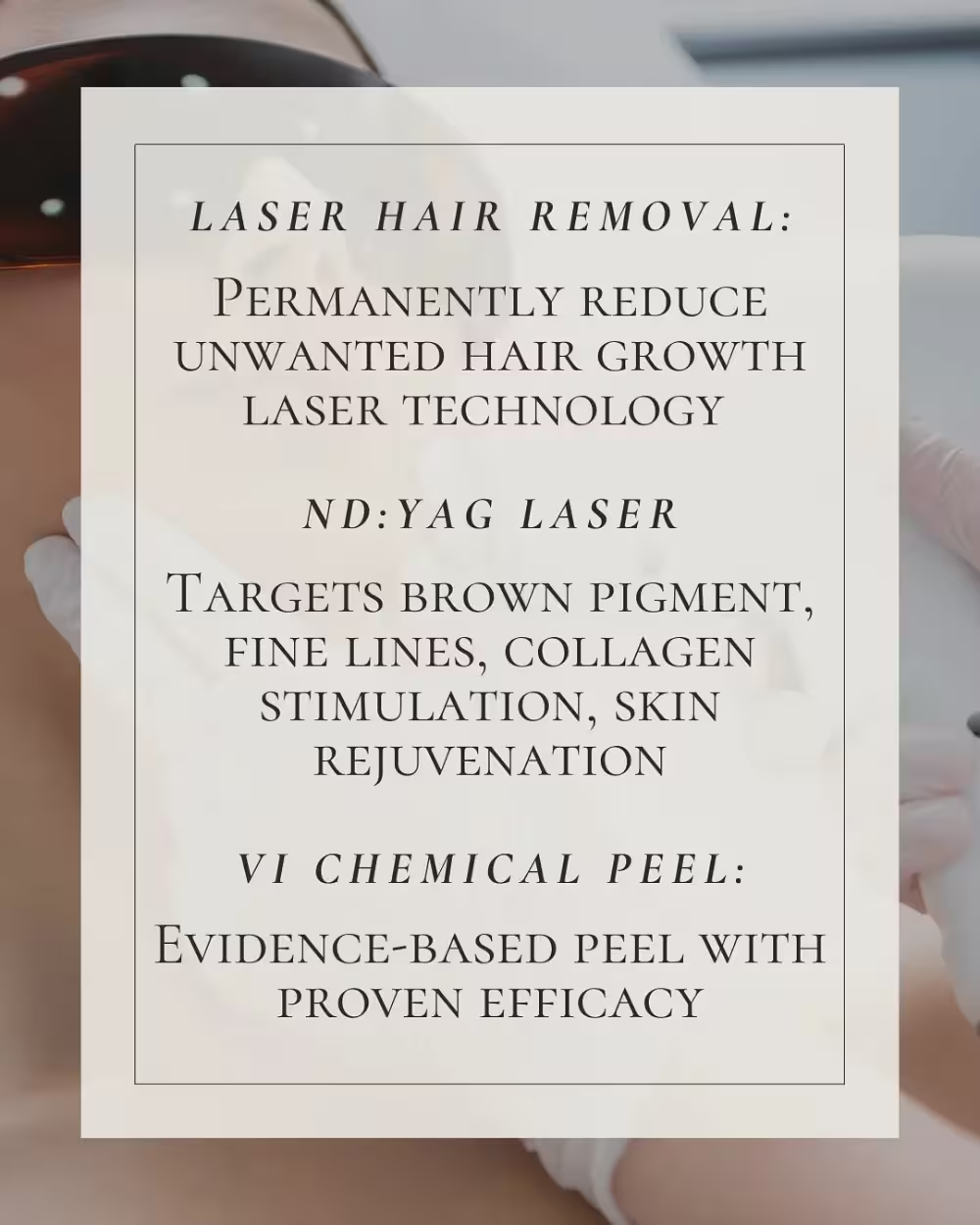
This is where laser hair removal changes the equation entirely. Instead of repeatedly cutting or pulling hair and hoping it doesn't grow back at an angle, laser hair removal targets the hair follicle itself, using concentrated light energy to disable its ability to produce new hair over time.
Because the follicle is being addressed directly rather than the surface level hair, there's no blade dragging across irritated skin, no wax ripping at the follicle opening, and far less friction related trauma overall. Fewer hairs growing back means fewer opportunities for that hair to curl inward and cause a bump in the first place.
At MAREE Aesthetics, we've worked with clients across Basking Ridge who came to us specifically because they were exhausted by recurring ingrown hairs on their underarms, bikini line, legs, or jawline, and wanted a solution that addressed the cause rather than just the symptoms.
How the Treatment Works
Laser energy is delivered directly into the hair follicle, where it's absorbed by pigment in the hair. This heats and damages the follicle enough to inhibit future growth, while leaving the surrounding skin unaffected. Most clients describe the sensation as a quick warm snap, similar to a rubber band flick, and treatments are generally quick depending on the area.
Who Is a Good Candidate
Laser hair removal works well for most skin tones and hair types, though results can vary based on hair and skin pigment contrast. During a consultation, our team evaluates your skin, hair pattern, and history with ingrown hairs to build a treatment plan suited to you. If you're someone who has struggled with chronic bumps in areas like the underarms, bikini line, legs, or face, this is exactly the kind of case laser treatment was designed to help.
What to Expect During a Series
Hair grows in cycles, so no single session gets every follicle at once. A series of sessions spaced several weeks apart targets hair as it moves through its active growth phase, gradually thinning it out and reducing regrowth over time. Many clients notice smoother skin and considerably fewer ingrown hairs after just a few sessions, with continued improvement as the series progresses.
Life After Treatment
Once a treatment area has gone through a full series, most clients find they no longer need to shave, wax, or pluck nearly as often, if at all, in that area. That alone removes most of the everyday triggers that caused ingrown hairs in the first place. To explore what a personalized plan might look like for your skin, you can browse the full range of options on our services page or learn more directly on our laser hair removal service page.
Breaking Up With Your Razor for Good
At some point, the constant cycle of shaving, waiting, wincing at new bumps, and starting all over again just isn't worth it anymore. Ingrown hairs and razor bumps aren't a personal failing or a sign you're doing something wrong. They're a predictable result of how traditional hair removal interacts with curved follicles, sensitive skin, and everyday friction.
If you're ready to stop managing the symptoms and actually address the cause, our team at MAREE Aesthetics in Basking Ridge is here to talk through your skin, your goals, and whether laser hair removal is the right next step for you.
Frequently Asked Questions
Why do I get ingrown hairs even when I shave carefully?
Careful shaving helps, but it can't change how your hair naturally grows. If your follicles are curved or your hair is coarse, the hair can still curl back into the skin even with a clean, sharp blade.
Is laser hair removal effective for people prone to ingrown hairs?
Yes. Since laser hair removal targets the follicle directly, it reduces the amount of hair regrowth over time, which means fewer opportunities for hair to curl back into the skin and cause irritation.
How many sessions does it take to see a difference?
Most clients notice a reduction in both hair regrowth and ingrown hairs after a few sessions, though a full series is recommended for the most complete and lasting results.
Can laser hair removal help with dark spots left behind by old ingrown hairs?
Laser hair removal is focused on reducing hair growth rather than treating existing pigmentation, but by preventing new ingrown hairs from forming, it removes the ongoing irritation that often causes those dark spots to begin with.
Where can I get laser hair removal in Basking Ridge, New Jersey?
MAREE Aesthetics offers laser hair removal for clients throughout Basking Ridge and the surrounding New Jersey area, with treatment plans built around your specific skin and hair type.