.png)


You get a full night's sleep. You drink your water. You are not, by any reasonable measure, "old." And yet the mirror keeps telling a different story, with shadowy hollows carved under your eyes and two deepening grooves running from your nose to the corners of your mouth. If you have caught yourself wondering what is actually going on with your face, you are far from alone, and the answer has less to do with fatigue and more to do with something happening beneath the surface of your skin.
This is one of the most common concerns we hear from patients at our med spa in Basking Ridge, New Jersey, and it usually comes with the same confused follow up: "But I'm not tired, so why do I look tired?" The honest answer is that hollows and deep folds are rarely about sleep at all. They are about volume, specifically the fat, collagen, and structural support your face has been quietly losing for years, often starting earlier than most people expect.
This article breaks down what is really causing those changes, how to tell the difference between a hollow that needs volume and dark circles that need something else entirely, and how dermal fillers have become one of the more effective, well studied ways to restore that lost structure without looking overdone. Updated for August 2026 with the latest approach we use with patients right here in Basking Ridge.
The Real Reason Behind Under-Eye Hollows and Deep Smile Lines
It's Volume Loss, Not Just "Aging"
Most people assume facial aging is mainly about sagging skin, but research on facial anatomy has shown that volume loss is actually the primary driver, and it often starts in your late twenties or early thirties. Underneath your skin sits a layer of fat pads that cushion and support your features. Around the under-eye area and midface, those fat pads begin to shrink and shift downward over time. As that cushioning thins out, the bony orbital rim becomes more visible, which is what creates that sunken, hollow look under the eyes.
The same process happens around the nose and mouth. The deep cheek fat that once supported the mid face starts to deflate, and without that support, the tissue around it folds inward, forming the nasolabial folds most people call smile lines. It is not that the skin itself is failing you, it is that the scaffolding underneath has changed.
Collagen and Elastin Decline Faster Than You'd Think
Collagen production starts declining by roughly one percent per year starting in your twenties, according to dermatology research, and that decline accelerates around perimenopause for women. Less collagen means thinner, less resilient skin, which makes any existing hollowing or folding more visible and harder for skin alone to camouflage.
Genetics, Sun Exposure, and Lifestyle Play a Bigger Role Than You Think
Some people are simply built with less under-eye fat padding or thinner skin in that area, which is why siblings can look noticeably different in age even with similar habits. Layer on years of sun exposure, which breaks down collagen and elastin faster, and the effect compounds. Chronic dehydration, smoking, significant weight loss, and even long-term screen squinting can all speed up the appearance of hollowing and deepening folds, regardless of your actual age.
Hollows From Volume Loss vs. Dark Circles From Pigmentation or Sleep: How to Tell the Difference
This distinction matters a lot, because the solution for one is not the solution for the other, and being told otherwise is how people end up disappointed with a treatment that was never going to fix their specific concern.
Volume loss hollows tend to show up as a visible indentation or shadow along the bony orbital rim, often more noticeable at certain angles or under overhead lighting. If you gently press along the area and can feel a groove or dip rather than just discoloration, volume loss is likely playing a role.
Pigmented dark circles, on the other hand, are about skin tone, not structure. They are usually caused by excess melanin, thin skin that shows the blood vessels underneath, or genetics, and they tend to look flat rather than shadowed or sunken. Pressing on the skin does not change how deep it looks, because there is no actual indentation, just discoloration.
Sleep-related puffiness or dark circles are usually temporary, fluctuate day to day, and often improve somewhat with rest, cold compresses, or reducing salt intake the night before.
This is the part we want to be upfront about: dermal fillers are excellent for correcting volume loss and structural hollowing, but they are not a fix for pigmentation-based dark circles. If discoloration is your main concern, that calls for a different approach altogether, and any provider who tells you otherwise is not being straight with you. A proper consultation is where this gets sorted out, because the right treatment depends entirely on which of these is actually happening in your skin.
Who Tends to Develop These Concerns, and At What Age
Volume-related hollowing and deepening nasolabial folds are not exclusive to any one age group, but there are patterns worth knowing:
- Late 20s to mid 30s: Early signs often start here, especially in people with naturally thinner under-eye fat pads, significant sun exposure, or a family history of early volume loss.
- Late 30s to 40s: This is when most patients start noticing it in photos or under certain lighting, often describing themselves as looking "tired" even when they are not.
- 50s and beyond: Volume loss becomes more pronounced as collagen decline accelerates, particularly for women going through perimenopause and menopause.
Lifestyle factors can push these timelines earlier. Frequent sun exposure without SPF, a history of smoking, rapid or significant weight loss, and even genetics that run in your family can all mean you notice these changes years before you "should" by age alone.
How Dermal Fillers Restore What Volume Loss Takes Away
Once volume loss is confirmed as the underlying cause, dermal fillers work by directly replacing what the face has lost, rather than just smoothing the surface. At MAREE Aesthetics, we use a range of filler formulations because different areas and concerns call for different tools.
Hyaluronic Acid Fillers for Structural Volume
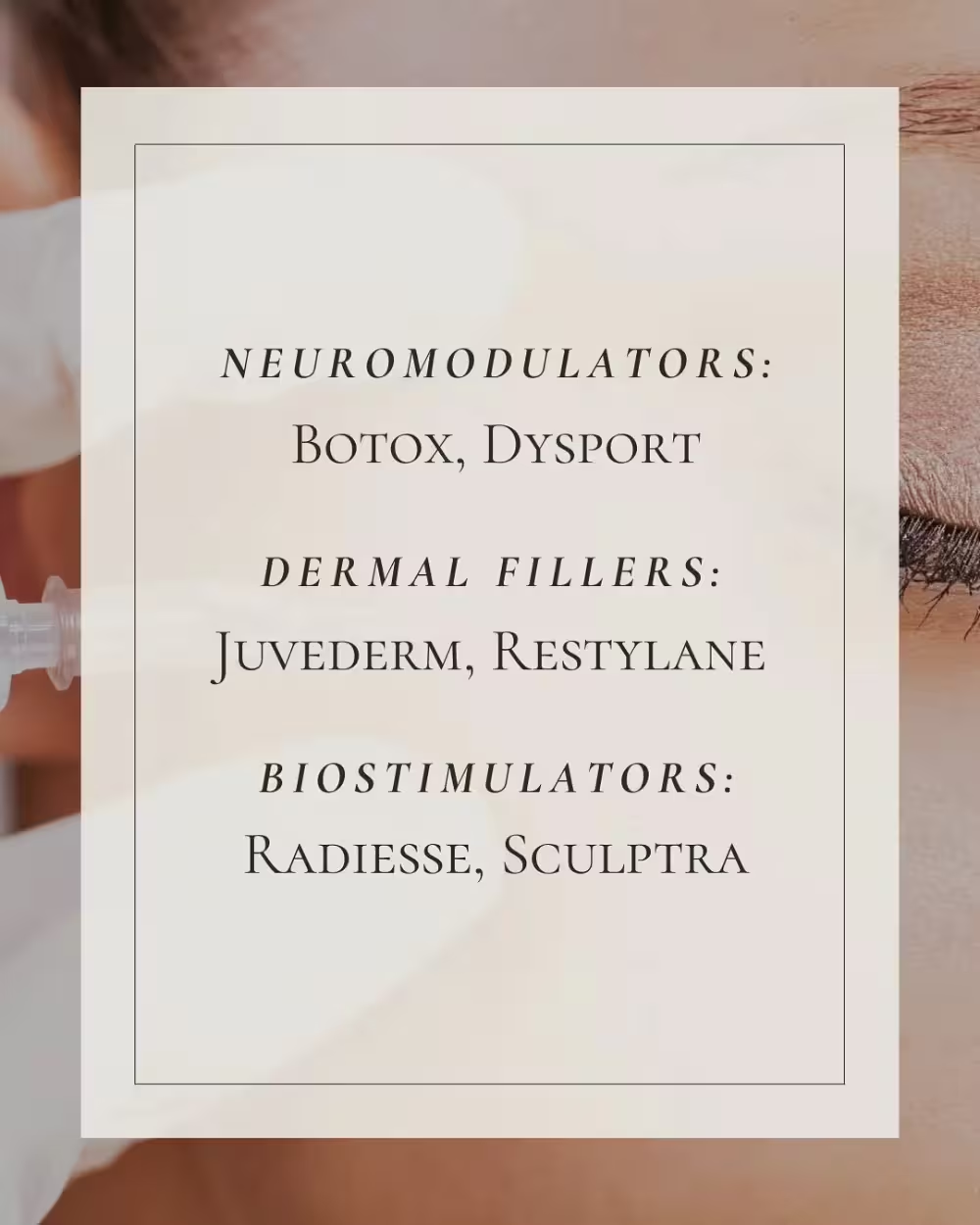
For deeper hollows under the eyes and pronounced nasolabial folds, hyaluronic acid based fillers add immediate, visible structure. These fillers attract and hold water, which helps rebuild the natural contour of the midface and soften the shadow that hollowing creates. They are also reversible, which gives patients peace of mind if they ever want the treatment adjusted.
Biostimulator Fillers for Longer-Term Collagen Support
For patients whose main issue is a broader loss of facial volume and collagen over time, biostimulator options work a bit differently. Rather than just filling space, they encourage your own body to rebuild collagen gradually, which means results build over several weeks and tend to last longer. This approach is often a great fit for smile lines and midface volume loss that has developed slowly over the years.
Skinvive for Fine Lines, Hydration, and Skin Quality
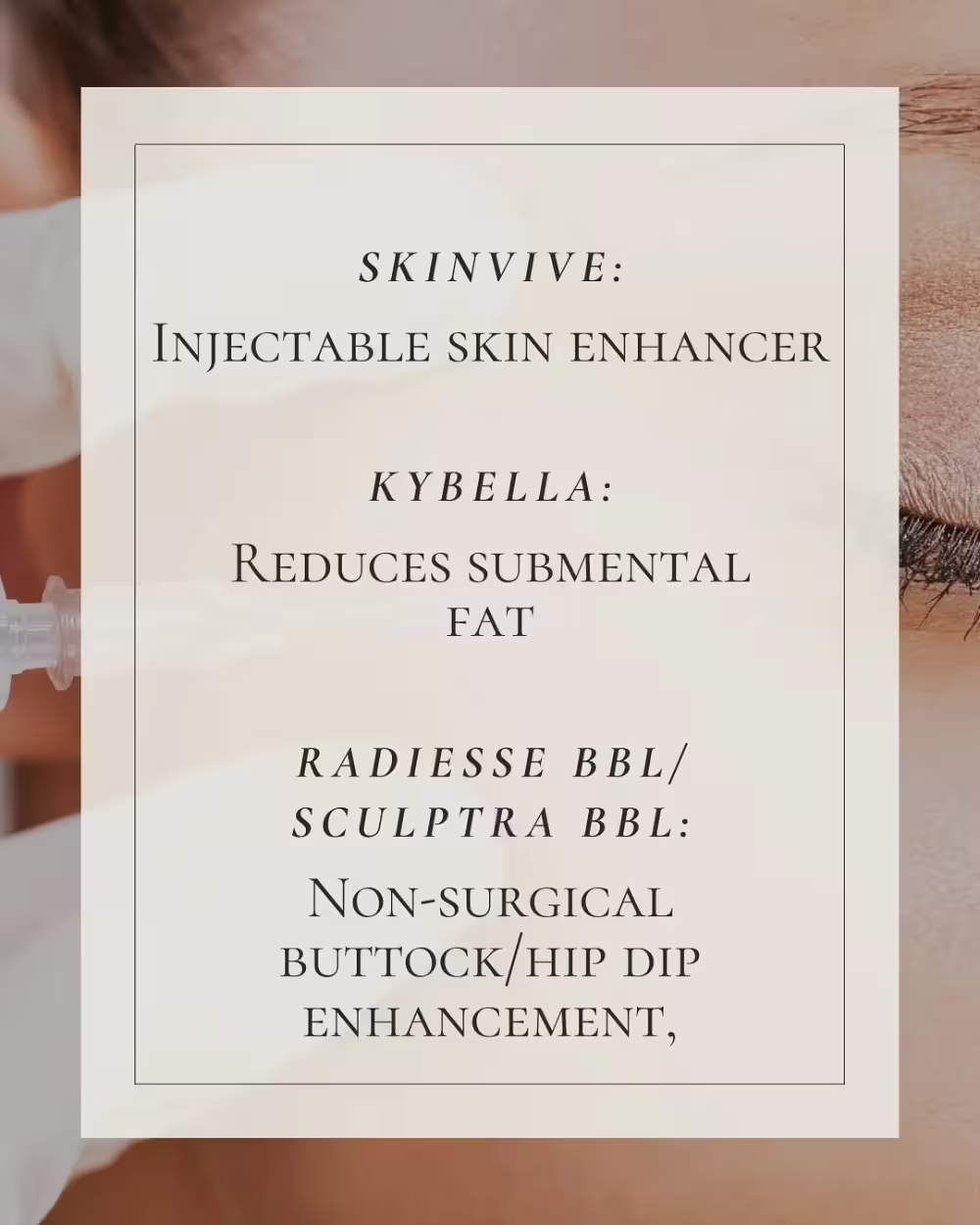
For patients dealing with early, finer lines or overall skin texture and hydration concerns rather than deep structural hollowing, Skinvive by Juvederm is a microdroplet injectable that improves skin smoothness and hydration from within, without adding the kind of volume traditional fillers provide. It is often used alongside structural fillers or on its own for patients whose concerns are more surface level.
What to Expect: Candidacy, Consultation, and Results
Are You a Good Candidate?
Most healthy adults noticing early to moderate volume loss, hollowing, or deepening folds are good candidates for dermal fillers. The best way to know for certain is a consultation where we assess your specific anatomy, skin quality, and the actual cause behind what you are seeing, since not every concern under the eyes calls for the same treatment.
The Consultation Process at MAREE Aesthetics
During your visit, we take time to examine the areas you are concerned about, discuss your goals, and determine whether the issue is volume loss, pigmentation, skin laxity, or a combination. From there, we build a customized plan using the dermal fillers that best match your anatomy and desired outcome, always aiming for natural, refreshed results rather than an overfilled look.
What the Appointment Feels Like
Treatments are typically quick, often thirty to forty five minutes depending on the areas treated, with a topical numbing option available for comfort. Most patients see visible improvement immediately, with any minor swelling or bruising settling within a few days.
How Long Results Last
Hyaluronic acid fillers in the under-eye and midface area typically last between nine months and a year, depending on the product used and your body's metabolism. Biostimulator results build gradually and can last well beyond a year as collagen production improves. We will walk you through realistic timelines for your specific treatment plan during your consultation.
The Bottom Line on Looking Rested Without Actually Needing More Sleep
So no, you are not imagining it, and you are definitely not "too young" to be dealing with this. Under-eye hollows and deep nasolabial folds are structural, driven by fat pad and collagen loss that can start well before your thirties, and no amount of extra sleep is going to reverse that on its own. The encouraging part is that once you understand what is actually causing the shadow or the fold, addressing it becomes a lot more straightforward.
If you are in or around Basking Ridge, New Jersey and have been staring at your under-eye area wondering what happened, a proper consultation is the best next step. Our team can help you figure out exactly what is going on and whether dermal fillers are the right fit for restoring the volume and structure you have lost. Visit our Basking Ridge med spa to schedule a consultation and get a plan built specifically around your face, not a generic one size fits all approach.
Frequently Asked Questions
Can dermal fillers fix dark circles under my eyes?
Dermal fillers can improve shadowing caused by volume loss and hollowing, but they do not correct dark circles caused by pigmentation or thin, discolored skin. A consultation can help determine which factor is driving your specific concern.
At what age should I start considering dermal fillers for hollows or smile lines?
There is no set age. Some people notice early volume loss in their late twenties or early thirties due to genetics or sun exposure, while others do not see significant changes until their forties or fifties. Treatment is based on what your face actually needs, not a specific number.
How long do dermal fillers last in the under-eye and nasolabial fold areas?
Hyaluronic acid fillers generally last nine months to a year in these areas, while biostimulator options can encourage collagen production that lasts well beyond that. Your provider will give you a personalized estimate based on the product used.
Is Skinvive the same as traditional dermal fillers?
Not exactly. Skinvive is designed to improve hydration and skin quality for finer lines and texture, while traditional dermal fillers add structural volume for deeper hollows and folds. Many patients benefit from a combination of both.
Does getting dermal fillers hurt?
Most patients describe the sensation as mild pressure or a brief pinch rather than significant pain. Topical numbing is available, and any soreness or swelling afterward is typically minor and temporary.