.png)


If you have caught yourself tilting your chin up in photos, or noticed your jawline does not look quite as crisp as it used to, you are not imagining things, and you are definitely not alone. Patients across Morris County, and nearby Somerset County, ask us some version of the same question almost every week: why does skin start to sag, and is there anything that actually works to reverse it?
The honest answer is more interesting than "you're just getting older." Sagging skin has a biological timeline, and understanding that timeline is the key to knowing what to do about it, and when. Updated this September 2026, this guide walks through the science of sagging skin, why it tends to show up first along the jawline and neck, and which treatments at Marée Aesthetics & Longevity are actually designed to address it.
What Causes Skin to Lose Its Firmness in the First Place?
Is Sagging Skin Really About Collagen and Elastin?
Yes, largely. Your skin's structure depends on two proteins working together. Collagen acts like the scaffolding that gives skin its thickness and firmness, while elastin allows it to stretch and spring back into place. Together they form a support network sitting just beneath the surface of the skin.
Starting in your mid to late twenties, collagen production begins a slow, steady decline of roughly one percent per year. Elastin follows a similar pattern, and unlike collagen, it does not regenerate nearly as efficiently once it breaks down. This is a completely normal part of aging, but it explains why skin that once felt bouncy and resilient gradually starts to feel softer and looser.
Why Does the Decline Speed Up in Your 30s, 40s, and 50s?
The one percent yearly decline sounds gradual, but it compounds. By your mid thirties, you have already lost a meaningful percentage of the collagen you had in your twenties. By your forties and fifties, that loss becomes visible, not just measurable in a lab. This is why so many people describe feeling like their skin changed "overnight" somewhere around a milestone birthday, when in reality the decline had been building for years and simply crossed a visible threshold.
Hormonal shifts play a role here too. Estrogen supports collagen production, so the hormonal changes associated with perimenopause and menopause often accelerate the visible loss of firmness, particularly through the cheeks, jawline, and neck.
What Other Factors Speed Up Sagging Skin?
Genetics set your baseline, but several everyday factors influence how quickly that baseline shows up on your face:
- Sun exposure. Ultraviolet light breaks down collagen and elastin fibers faster than time alone. This is called photoaging, and it is one of the most preventable contributors to early sagging.
- Weight fluctuation. Skin has a certain amount of elasticity, but repeated stretching and shrinking, whether from weight changes or significant weight loss, can outpace skin's ability to snap back.
- Smoking. Smoking restricts blood flow to the skin and directly damages collagen, which is why smokers often show sagging and fine lines earlier than non-smokers of the same age.
- Sleep position and repetitive expressions. These matter less than the factors above, but combined with reduced elasticity, they can contribute to how and where laxity shows up over time.
Why Does Sagging Show Up First Along the Jawline and Neck?
This is one of the most common questions we hear, and there is a straightforward anatomical reason behind it. The jawline and neck have comparatively less underlying fat and muscle support compared to areas like the cheeks. Gravity also plays a constant, cumulative role, and the skin along the lower face and neck has fewer structural anchors holding it taut.
As collagen and elastin decline, the skin along the jawline is often the first place where that loss becomes visible, appearing as softness along the jaw, the beginning of jowls, or looseness under the chin. The cheeks tend to follow, as volume loss in the midface allows skin to descend rather than sit lifted against strong support structures.
Understanding this pattern is useful because it means early intervention along the jawline and neck can meaningfully change how the rest of the face ages, rather than waiting until laxity is more advanced.
Is Sagging Skin Reversible, or Only Preventable?
Here is the encouraging part. While you cannot stop the biological clock entirely, sagging skin is not simply something you have to accept. Treatments that stimulate your own collagen production can visibly improve skin firmness, and starting sooner rather than later tends to produce more noticeable, longer lasting results.
Can You Stimulate New Collagen Production?
Yes. This is exactly where biostimulator treatments come in, and it is a different approach than simply filling in a wrinkle. Rather than adding volume that sits passively under the skin, biostimulators work by triggering your body's own collagen production over time, which is why results tend to build gradually and look natural.
At Marée Aesthetics & Longevity, our biostimulator treatments are designed specifically to address this kind of gradual collagen decline. Two of the most well studied options include:
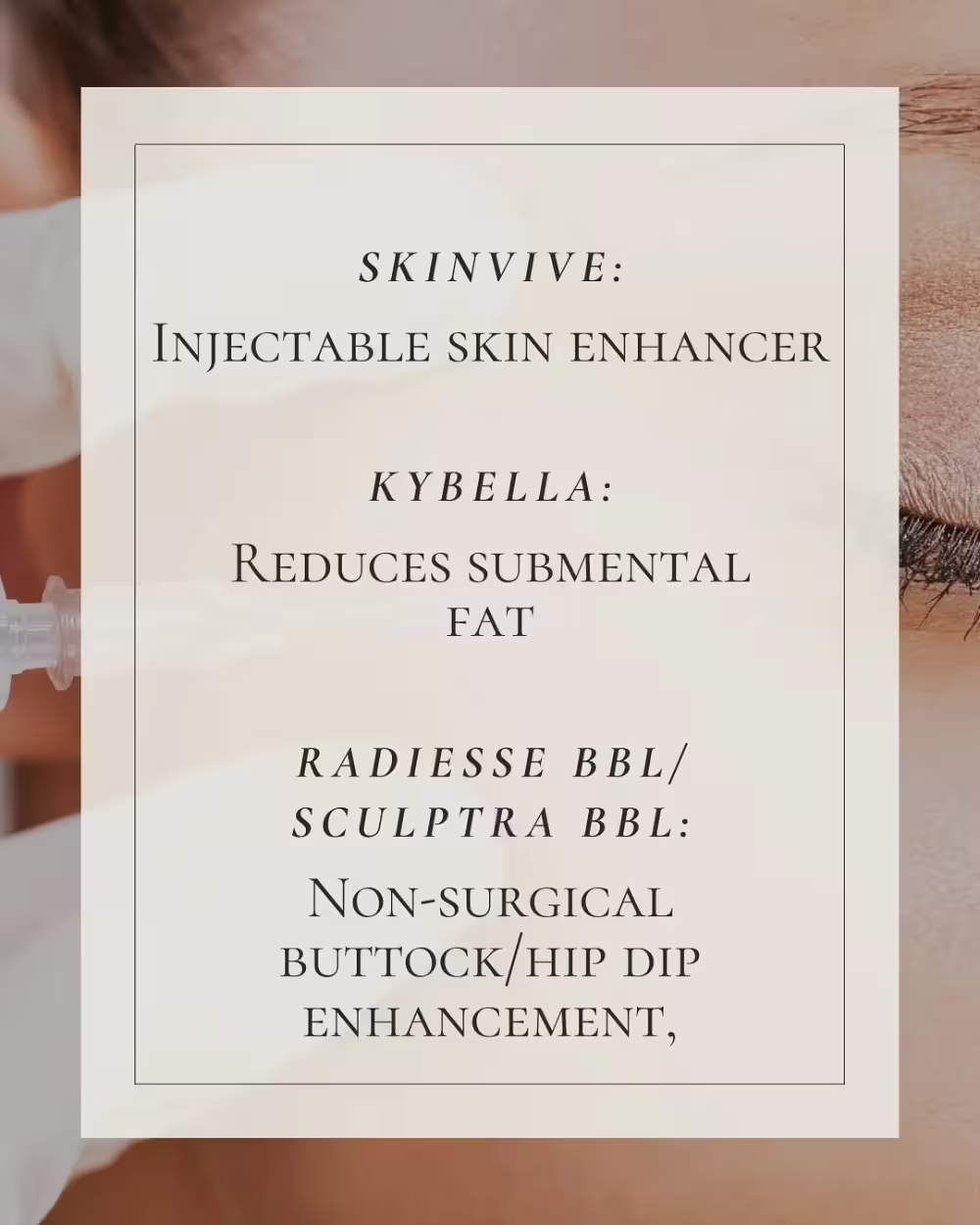
- Sculptra, which uses poly-L-lactic acid to stimulate collagen production over a series of sessions, making it a popular choice for patients noticing gradual volume loss and softness through the cheeks and jawline.
- Radiesse, which combines an immediate lifting effect with calcium hydroxylapatite that continues to stimulate collagen production long after the appointment.
Both are considered biostimulators because they work with your skin's own repair processes rather than simply masking the sign of laxity.
Does Microneedling Help With Skin Firmness?
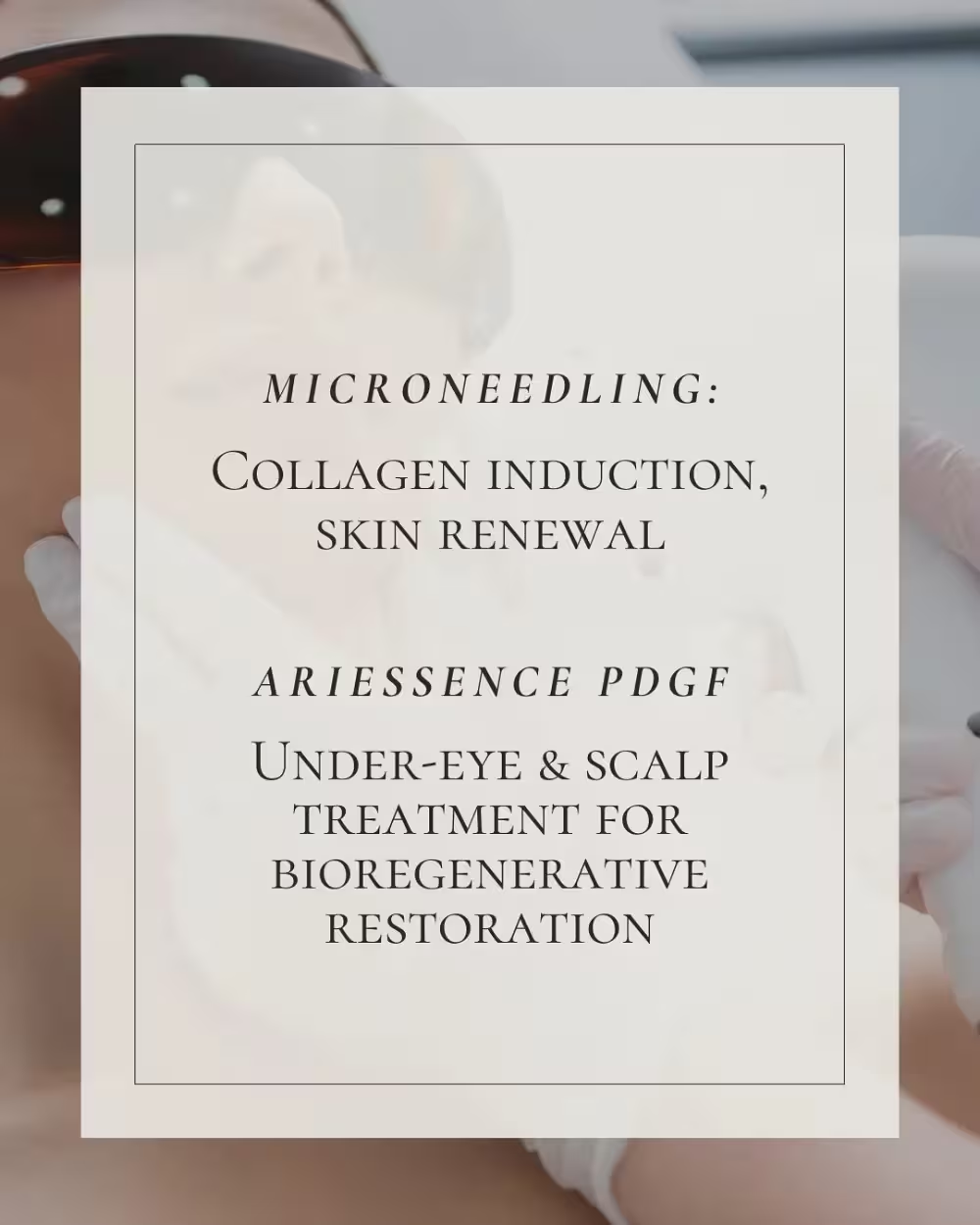
It can, particularly for patients who want to support skin texture and firmness without injectables, or alongside them. Microneedling creates controlled micro-injuries in the skin, prompting the body's natural healing response, which includes new collagen and elastin formation. Many patients throughout Morris County and Somerset County use microneedling as part of an ongoing maintenance plan, especially when early laxity is paired with texture concerns like enlarged pores or uneven tone.
When Should Someone Actually Start Treatment?
There is no single "right age," but there is a useful principle. The earlier collagen decline is addressed, the more responsive the skin tends to be. Patients in their thirties often use biostimulator treatments preventively, aiming to slow visible changes before they set in. Patients in their forties and fifties frequently use the same treatments to restore firmness that has already started to shift, particularly along the jaw and neck.
If you are noticing early softness along the jawline, a slightly less defined profile in photos, or skin that no longer bounces back the way it once did, that is generally a sign worth exploring your options rather than waiting.
Who Is a Good Candidate for Collagen Stimulating Treatments?
Good candidates are generally adults in overall good health who are noticing early to moderate volume loss or skin laxity and want a gradual, natural looking improvement rather than a dramatic or immediate change. Because biostimulators work with your body's own collagen production, they tend to suit patients who are comfortable with results building over several weeks to months, rather than appearing instantly.
A consultation is the best way to determine which approach fits your skin, your goals, and your timeline. You can review our full menu of services or reach out through our contact page to schedule one.
How Marée Aesthetics & Longevity Approaches Sagging Skin
Every patient's collagen timeline looks a little different, which is why we do not believe in one size fits all treatment plans. Whether you are joining us from Morris County or Somerset County, our approach, based out of our Basking Ridge office, starts with understanding where you are on that timeline and what result you actually want to see.
For patients earlier in the process, that might mean a conservative Sculptra or Radiesse plan focused on the jawline. For patients noticing more visible laxity, it might mean combining biostimulators with microneedling to support both firmness and texture. If you are also curious about how sagging skin is typically evaluated more broadly, our related article on sagging skin causes and treatments offers a helpful overview alongside this one.
FAQs
At what age does sagging skin usually start? Collagen decline technically begins in your mid to late twenties, but most people do not notice visible sagging skin until their mid thirties to fifties, depending on genetics, sun exposure, and lifestyle factors.
Why does my jawline look less defined than it used to? The jawline has less underlying support than areas like the cheeks, so it is often one of the first places where collagen and elastin decline becomes visible, appearing as softness or early jowling.
Can sagging skin be reversed without surgery? For many patients, yes. Biostimulator treatments like Sculptra and Radiesse work by encouraging your own collagen production, which can visibly improve firmness without surgical intervention.
Is microneedling enough on its own for sagging skin? Microneedling can support firmness and texture, especially for early laxity, but patients with more noticeable sagging often see stronger results when it is paired with a biostimulator treatment.
Does sun exposure really make sagging skin worse? Yes. Ultraviolet exposure breaks down collagen and elastin faster than aging alone, which is why consistent sun protection is one of the most effective ways to slow visible sagging over time.
Do results from Sculptra or Radiesse look natural? Because these treatments stimulate your body's own collagen gradually rather than adding immediate volume, results tend to build subtly over weeks to months, which most patients describe as looking like a refreshed, natural version of themselves.
The Not So Silent Culprit Behind That Loosening Jawline
Sagging skin is not a mystery, and it is not something that appears out of nowhere. It follows a predictable biological timeline shaped by collagen and elastin decline, accelerated by sun exposure, hormones, and lifestyle factors, and it tends to announce itself first along the jawline and neck for very specific anatomical reasons. The good news is that understanding this timeline puts you back in control of it. Whether you are just starting to notice subtle changes or you are ready to address more visible laxity, Marée Aesthetics & Longevity, conveniently located in Basking Ridge, welcomes patients from throughout Morris County and Somerset County to talk through what makes sense for your skin, your timeline, and your goals.